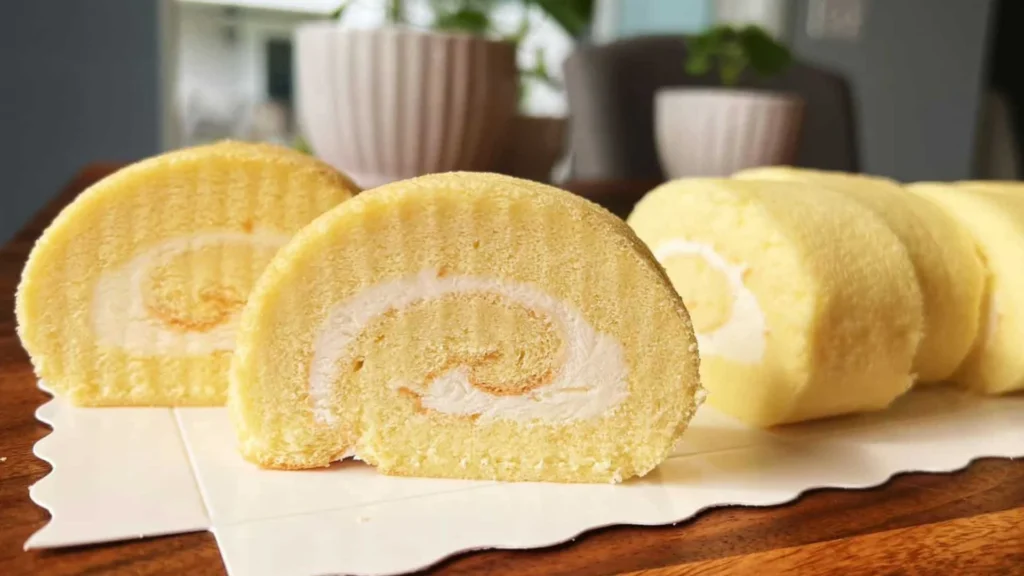
Japanese roll cake recipe is a soft, fluffy sponge cake rolled with lightly sweetened whipped cream. I have made this Japanese roll cake recipe many times, experimenting with both traditional bakery style and my own small modifications for texture and sweetness.
The recipe delivers a delicate, tender cake that melts in the mouth while the cream adds smooth richness. This Japanese roll cake recipe brings joy when shared, showing how homemade desserts can rival bakery versions.
I will now show step-by-step how to make this Japanese roll cake recipe from start to finish.
Why You’ll Love This Recipe
You’ll love this Japanese roll cake recipe because the sponge is incredibly light, soft, and fluffy, almost melting in your mouth. The whipped cream filling adds a gentle sweetness without being heavy, making each slice feel delicate and airy.
It’s visually elegant, easy to customize with flavors like vanilla or matcha, and holds its shape beautifully when rolled. Baking it allows you to enjoy a bakery-quality dessert at home with minimal ingredients.
Every slice brings a tender texture and a creamy finish, making these Japanese roll cake recipe a treat for any dessert lover.
How To Prepare Japanese Roll Cake Recipe?
To make this Japanese roll cake recipe perfectly, we’ll go step by step! I’ve explained each part clearly and included tips to guide you through the process.
I’ve also listed useful kitchen tools, though not all are required. Using what you have, you can still create a soft, fluffy, and delicious roll cake.
Recipe Overview
Preparation Time: 20 minutes
Cooking Time: 15 minutes
Total Time: 35 minutes
Course: Dessert
Cuisine: Japanese
Yield: 8 servings
Kitchen Utensils
- Mixing bowls
- Electric mixer or whisk
- Sifter
- Rubber spatula
- 10×15-inch jelly roll pan (or similar)
- Parchment paper
- Cooling rack
- Pastry bag
Ingredients
For the Cake:
- 4 large egg yolks, at room temperature
- ½ cup cake flour
- ¼ cup granulated sugar (for yolk mixture)
- 4 large egg whites, at room temperature
- ¼ teaspoon cream of tartar
- ½ teaspoon vanilla extract
- ¼ cup vegetable oil
- 3 tablespoons whole milk
- ½ teaspoon baking powder
- ⅓ cup granulated sugar (for egg whites)
- ¼ teaspoon salt
For the Filling:
- ¾ cup heavy whipping cream
- 1.5 tablespoons powdered sugar
- 1 teaspoon vanilla extract
Instructions
Step 1: Preheat Oven and Prepare Pan
Set your oven to 350°F (175°C). Line a 10×15-inch jelly roll pan with parchment paper and lightly grease it so the cake doesn’t stick.
Step 2: Make the Egg Yolk Batter
In a medium bowl, whisk together the egg yolks and ¼ cup sugars until the mixture becomes pale and slightly thick. Stir in the vanilla extract, vegetable oil, and milk. Sift the cake flour and baking powder over the mixture, and then gently fold everything together until smooth.
Step 3: Beat the Egg Whites
In a clean, dry bowl, beat the egg whites with cream of tartar and a pinch of salt until soft peaks form. Gradually add ⅓ cup sugar while continuing to beat until stiff peaks form.
Step 4: Combine Egg Yolk and Egg White Mixtures
Start by folding one-third of the beaten egg whites into the egg yolk batter to lighten it. Then fold in the remaining egg whites carefully, making sure not to deflate the mixture.
Step 5: Bake the Cake
Pour the batter into the prepared pan and spread it evenly. Bake for 12–15 minutes, or until the cake springs back lightly when touched. Remove from the oven and let it cool for 2–3 minutes.
Step 6: Roll the Cake
Lay a clean kitchen towel over the cake, and then carefully invert the pan. Peel off the parchment paper. While the cake is still slightly warm, roll it up with the towel and let it cool completely in the rolled shape this helps prevent cracking.
Step 7: Prepare the Filling
In a chilled bowl, whip the heavy cream with powdered sugar and vanilla extract until stiff peaks form.
Step 8: Assemble the Cake
Unroll the cooled cake, spread the whipped cream evenly over it, then gently roll it back up without the towel. Trim the edges if you like, dust with powdered sugar, and it’s ready to serve.
Notes: Use room-temperature eggs to achieve a light, airy sponge. Fold the batter gently to retain fluffiness. Roll the cake while slightly warm to prevent cracking. Chill before slicing for clean edges. Fresh whipped cream can be flavored with a touch of vanilla or fruit puree for variation
Nutrition Facts Of Japanese Roll Cake Recipe
| Nutrition | Amount |
|---|---|
| Calories | 220 kcal |
| Carbohydrates | 20 g |
| Protein | 4 g |
| Fat | 14 g |
| Sugar | 12 g |
Why It’s a Favorite Among Dessert Lovers
This Japanese roll cake recipe is a favorite among dessert lovers because of its light, airy texture and delicate sweetness. The soft sponge melts in the mouth while the whipped cream adds a creamy, smooth contrast.
Japanese roll cake recipe elegant appearance and simple yet refined flavor make it stand out on any dessert table. Easy to slice and serve, it appeals to both home bakers and experienced pastry enthusiasts.
The balance of sweetness and fluffiness creates a satisfying treat without feeling heavy, making it a beloved choice for birthdays, gatherings, or afternoon tea.
Why My Recipe Works
My Japanese roll cake recipe works because the sponge stays light and airy while holding its shape when rolled. Room-temperature eggs create a stable batter, and folding the egg whites carefully into the yolk mixture traps air, giving the cake its soft texture.
Sifting the flour prevents lumps and keeps the sponge delicate. The whipped cream filling is lightly sweetened, enhancing the flavor without being heavy.
Following the instructions carefully ensures the Japanese roll cake recipe rises evenly, rolls smoothly, and maintains a tender, fluffy texture, producing consistent, bakery-quality results every time.
Professional Baking Tips
1. Always weigh your ingredients with a kitchen scale instead of just using cups. Baking is a science small difference in flour, sugar, or butter can change the texture and rise of your baked goods.
2. Take eggs, butter, and milk out of the fridge ahead of time. Room-temperature ingredients mix more evenly, giving you a smoother batter and a lighter, fluffier cake.
3. Once you combine wet and dry ingredients, mix only until just combined. Over mixing develops gluten in the flour, which can make cakes and muffins tough instead of soft and tender.
4. Always preheat the oven to the right temperature before putting in your baked goods. Starting in a cold oven can cause uneven baking or poor rise.
5. If your oven has hot spots, turn your pans halfway through the baking time. This ensures your cakes, cookies, or breads bake evenly on all sides.
6. Don’t rush cooling. Remove cakes from the pan as directed and let them cool completely on a wire rack. Proper cooling prevents sogginess and makes them easier to frost or slice.
Additions
➤ Fresh fruit – Adding thin slices of strawberries, kiwi, blueberries, or mango inside the roll brightens the flavor and adds natural sweetness. The fruit also adds a pop of color, making each slice visually appealing.
➤ Flavored cream – Whipped cream can be lightly flavored with matcha powder, cocoa powder, coffee extract, or even a hint of citrus zest. This adds depth to the filling while keeping the texture smooth and airy.
➤ Jam or curd – Spreading a thin layer of fruit jam or citrus curd on the sponge before adding cream introduces a tangy contrast to the sweetness. It also keeps the roll moist and flavorful.
➤ Chocolate drizzle– Drizzling melted chocolate or ganache over the finished roll adds richness and elegance. It also creates a professional bakery-style look while complementing the soft, light sponge.
➤ Toasted nuts – Sprinkling finely chopped or slivered almonds, pistachios, or hazelnuts inside the roll or on top adds a subtle crunch. The toasted flavor balances the sweet cream and enhances the overall texture of the cake.
Cake Storage
Store the Japanese roll cake recipe in the refrigerator, wrapped tightly in plastic wrap or kept in an airtight container to prevent it from drying out. It will stay fresh for 2–3 days.
For longer storage, you can freeze the Japanese roll cake recipe for up to a month. Wrap it first in parchment paper, then in plastic wrap, and place it in a freezer-safe bag or container.
Thaw in the refrigerator before slicing. Avoid storing at room temperature for long periods, as the cream filling can spoil and the sponge can lose its soft texture.
Frequently Asked Questions
Why did my cake batter turn out too thin?
If your batter is too thin, it may be because the ingredients weren’t beaten long enough or too much liquid was added. Always measure carefully and follow your recipe closely.
How do I prevent a cake from sticking to the pan?
Grease the pan well and use parchment paper. After baking, let the cake cool slightly before removing it so it comes out cleanly.
What’s the difference between baking powder and baking soda?
Both help cakes rise, but baking powder contains its own acid and works on its own, while baking soda needs an acidic ingredient like buttermilk to activate.
How can I tell when my cake is done?
Insert a toothpick into the center if it comes out clean or with a few crumbs, it’s ready. The cake should also spring back lightly when touched.
Why didn’t my cake rise properly?
Check your baking powder/soda it may be expired or the amounts were incorrect. Also make sure the oven was at the right temperature.
Conclusion
This Japanese roll cake recipe is loved by everyone who tries it, and it always brings smiles at serving time. I have made this recipe many times, and every time I enjoy the process of baking and sharing it.
The soft, fluffy sponge and creamy filling create a dessert that is both elegant and comforting. Making it feels rewarding, and watching others enjoy it makes it even better.
I hope you try this Japanese roll cake recipe yourself and experience the joy of creating a beautiful, delicious cake that everyone will appreciate.
CRAVING MORE RECIPES?
Copycat Olive Garden Lemon Cake Recipe
Favorite Oatmeal Creme Pie Cake Recipe
Best Lemon Custard Cake Recipe
Popular Jalapeño Cheese Bread Recipe
Authentic Thai Butter Cake Recipe
Japanese Roll Cake Recipe

Equipment
- Mixing bowls
- Electric mixer or whisk
- Sifter
- Rubber spatula
- 10×15-inch jelly roll pan (or similar)
- parchment paper,
- Cooling rack
- Pastry bag
Ingredients
For the Cake:
- 4 large egg yolks at room temperature
- ½ cup cake flour
- ¼ cup granulated sugar for yolk mixture
- 4 large egg whites at room temperature
- ¼ teaspoon cream of tartar
- ½ teaspoon vanilla extract
- ¼ cup vegetable oil
- 3 tablespoons whole milk
- ½ teaspoon baking powder
- ⅓ cup granulated sugar for egg whites
- ¼ teaspoon salt
For the Filling:
- ¾ cup heavy whipping cream
- 1.5 tablespoons powdered sugar
- 1 teaspoon vanilla extract
Instructions
Step 1: Preheat Oven and Prepare Pan
- Set your oven to 350°F (175°C). Line a 10×15-inch jelly roll pan with parchment paper and lightly grease it so the cake doesn’t stick.
Step 2: Make the Egg Yolk Batter
- In a medium bowl, whisk together the egg yolks and ¼ cup sugars until the mixture becomes pale and slightly thick. Stir in the vanilla extract, vegetable oil, and milk. Sift the cake flour and baking powder over the mixture, and then gently fold everything together until smooth.
Step 3: Beat the Egg Whites
- In a clean, dry bowl, beat the egg whites with cream of tartar and a pinch of salt until soft peaks form. Gradually add ⅓ cup sugar while continuing to beat until stiff peaks form.
Step 4: Combine Egg Yolk and Egg White Mixtures
- Start by folding one-third of the beaten egg whites into the egg yolk batter to lighten it. Then fold in the remaining egg whites carefully, making sure not to deflate the mixture.
Step 5: Bake the Cake
- Pour the batter into the prepared pan and spread it evenly. Bake for 12–15 minutes, or until the cake springs back lightly when touched. Remove from the oven and let it cool for 2–3 minutes.
Step 6: Roll the Cake
- Lay a clean kitchen towel over the cake, and then carefully invert the pan. Peel off the parchment paper. While the cake is still slightly warm, roll it up with the towel and let it cool completely in the rolled shape this helps prevent cracking.
Step 7: Prepare the Filling
- In a chilled bowl, whip the heavy cream with powdered sugar and vanilla extract until stiff peaks form.
Step 8: Assemble the Cake
- Unroll the cooled cake, spread the whipped cream evenly over it, then gently roll it back up without the towel. Trim the edges if you like, dust with powdered sugar, and it’s ready to serve.